
India
India Bloc Witnesses Internal Changes as Parties Realign Positions
May 25, 2026 Source: News Katha
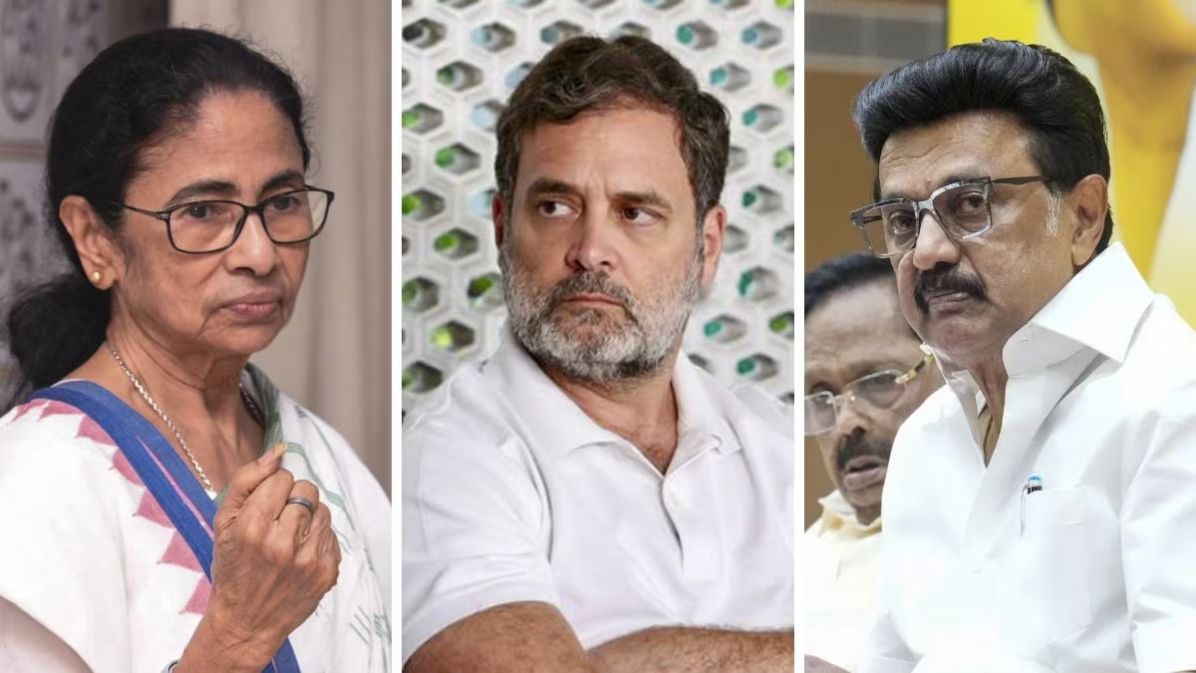
The political landscape within the India Bloc is undergoing significant changes, with shifting alliances, internal disagreements, and evolving strategies among key opposition parties. Recent electoral outcomes in West Bengal and Tamil Nadu have triggered a fresh wave of realignments, raising questions about the cohesion and future direction of the alliance formed to challenge the BJP at the national level.
Former West Bengal Chief Minister Mamata Banerjee has reaffirmed her support for the India Bloc despite earlier tensions. In Kolkata, she announced plans to convene a major India Bloc meeting in the first week of June, inviting like-minded parties to discuss the alliance’s future strategy. Her renewed engagement is seen as an attempt to stabilize the opposition front after recent electoral setbacks.
However, the unity within the bloc appears increasingly fragile. The Congress, Trinamool Congress (TMC), DMK, and Aam Aadmi Party (AAP) are all reportedly reassessing their positions. While Congress believes the changing political dynamics may work in its favor, other regional allies are expressing dissatisfaction over leadership decisions and coordination issues.
AAP leader Sanjay Singh has already declared that the party is moving out of the India Bloc, stating that the alliance was primarily formed for the 2024 general elections. This marks a significant departure and raises concerns about further fragmentation.
Meanwhile, tensions between the Congress and DMK have intensified. Reports suggest that DMK leaders are deeply unhappy with Congress’s political approach, with some calling its actions unreliable and inconsistent. There is even speculation that DMK may reconsider its alignment in the long run, although a formal shift appears unlikely at present. The DMK has also taken strong positions on national issues such as the Delimitation Bill and Women’s Reservation Bill, further highlighting ideological differences within the bloc.
The Congress, however, has gained some political advantage from recent developments, including its strengthened position in Kerala politics. Despite setbacks in some states, the party appears to be regaining confidence within the opposition framework.
Relations between key leaders have also seen fluctuations. Rahul Gandhi’s approach toward Mamata Banerjee has reportedly softened after earlier campaign tensions. Following election results, several opposition leaders, including Akhilesh Yadav, extended support to Banerjee, signaling efforts to maintain unity.
The opposition alliance had earlier demonstrated strength in Parliament by collectively opposing the Women’s Reservation Bill, but recent state election outcomes have altered the balance of influence within the bloc. Analysts suggest that these results have reshaped internal dynamics and weakened collective coordination.
Looking ahead, reports indicate that the opposition may adopt a more aggressive nationwide strategy. A large-scale India Bloc march is being planned over the next two and a half years, aimed at mobilizing public support against the BJP-led government. Unlike previous solo initiatives such as the Bharat Jodo Yatra, this proposed campaign is expected to include multiple alliance partners.
Overall, the India Bloc is at a critical juncture, balancing between unity and fragmentation as parties reassess their political priorities ahead of future electoral battles.