World
India Becomes Bangladesh’s Second-Largest Trade Partner, Overtakes US
May 22, 2026 Source: News Katha
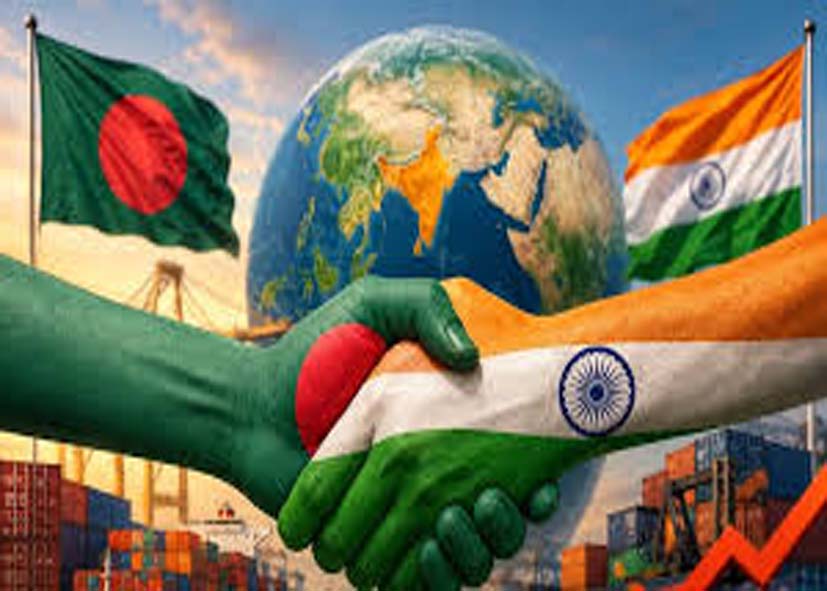
India has recently emerged as Bangladesh’s second-largest trading partner, overtaking the United States in a significant shift in regional trade dynamics. This development highlights the strengthening economic relationship between India and Bangladesh, driven by geography, improved connectivity, and growing demand for cross-border trade in essential goods.
According to the Bangladesh Bureau of Statistics, India accounted for 8.47% of Bangladesh’s total trade in February, with the total bilateral trade value estimated at around 123 billion rupees during the period. The United States closely followed with an 8.46% share, while China remained firmly in the top position with more than 21% of Bangladesh’s total trade share.
Trade between India and Bangladesh has expanded steadily in recent years across multiple sectors, including energy, textiles, pharmaceuticals, food products, machinery, and daily consumer goods. Experts point out that India’s geographic proximity gives it a natural advantage, as shorter transport routes reduce logistics costs and delivery times. Additionally, improvements in cross-border infrastructure, railway links, port connectivity, and trade facilitation measures have further boosted bilateral commerce.
However, the ranking has not remained entirely stable throughout the year. Data from earlier months of 2025 showed fluctuations, where the United States temporarily increased its share of Bangladesh’s imports, reaching around 9.6% between May and December 2025. During the same period, India’s share dropped slightly to 8.09%. Analysts suggest this shift was temporary and largely influenced by increased US exports of products such as LPG, cotton, and wheat to Bangladesh.
Several factors explain the changing trade positions. First, a rise in imports from the United States contributed to its short-term surge in trade share. Second, trade with India has faced occasional challenges, including import restrictions, customs delays, and administrative hurdles, along with periods of political tension that affected business sentiment. However, relations between the two neighbors have shown signs of improvement following changes in Bangladesh’s political leadership, which has helped restore momentum in trade flows.
Despite these shifts, China continues to dominate as Bangladesh’s largest trading partner due to its strong supply of industrial raw materials, machinery, electronic goods, and finished products. Meanwhile, other countries such as Indonesia and Brazil also play important roles, supplying energy resources, agricultural commodities, and essential raw materials.
Overall, the latest trade data reflects Bangladesh’s increasingly diversified global trade strategy. While China remains dominant, India’s rise to second place underscores deepening regional integration in South Asia, supported by economic proximity, infrastructure development, and growing interdependence between the two neighboring economies.