
World
Emergency in California After Chemical Leak, 44,000 People Moved
May 23, 2026 Source: News Katha
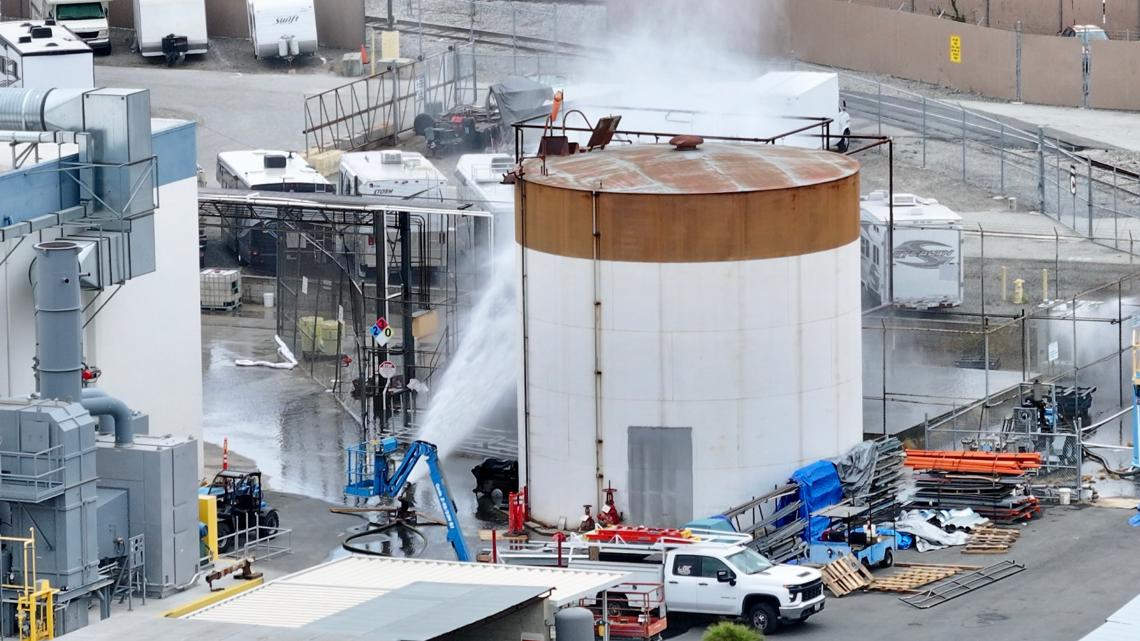
A major chemical emergency in Southern California has triggered large-scale evacuations after a toxic leak at an aerospace facility in Orange County, California, USA. More than 44,000 residents were forced to leave their homes as authorities warned that the situation could worsen due to the risk of a potential explosion or large-scale chemical release.
The incident occurred at a facility operated by GKN Aerospace, which produces components for both commercial and military aircraft. According to officials, a storage tank containing approximately 7,000 gallons of methyl methacrylate—a highly flammable and toxic chemical used in plastic manufacturing—developed a serious malfunction. The chemical leak prompted immediate safety concerns due to its volatility and the possibility of fire or explosion.
Emergency services quickly expanded evacuation orders across multiple nearby cities, including Garden Grove, Cypress, Stanton, Anaheim, Buena Park, and Westminster. As the situation developed, authorities extended warnings to additional areas, eventually impacting residents in at least five cities in Orange County. The scale of the evacuation reflects the seriousness of the risk posed by the chemical storage system.
Officials from the Orange County Fire Authority (OCFA) described the incident as extremely dangerous. Fire Chief Craig Covey emphasized the severity of the situation, stating that in his decades of experience, he had rarely encountered a risk of this magnitude. He warned that the situation remained unstable and that there was no clear timeline for when residents could safely return.
Emergency teams identified multiple storage tanks at the site, including one with a damaged cooling system. This malfunction raised fears of overheating, which could potentially lead to an explosion or structural failure. Authorities outlined two worst-case scenarios: either the compromised tank could rupture, releasing thousands of gallons of hazardous chemicals into the surrounding area, or it could overheat and trigger an explosion that might affect nearby tanks as well.
Both outcomes pose significant environmental and public health risks, including toxic air contamination, fire hazards, and long-term cleanup challenges. As a result, officials have urged residents to remain away from the affected zones until further notice.
Despite ongoing containment efforts, authorities have acknowledged that controlling the leak remains challenging. Emergency crews continue working at the site to stabilize the system and prevent further escalation. However, officials have not provided a clear timeline for lifting evacuation orders, citing the unpredictable nature of the situation.
The incident has raised serious concerns about industrial safety and emergency preparedness, as residents await further updates on whether the leak can be contained without causing a larger disaster.